March 8, 2026
The Heavy Camera: What to Do When Photography Stops Being Fun
We all know the look of a neglected camera.
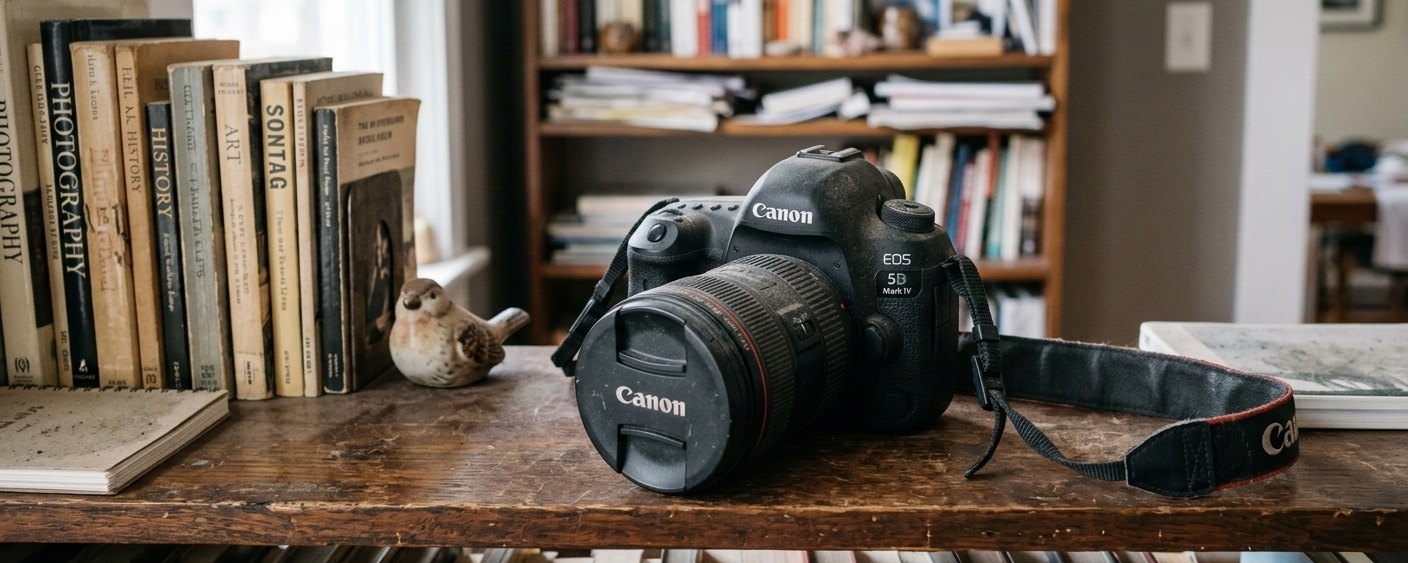
We all know the look of a neglected camera. It sits on the bookshelf or exactly where you left it on the desk three months ago, silently judging you. You used to take it on every hike, every family gathering, and every weekend walk. Now, the thought of charging the battery and formatting the SD card just feels exhausting.
When a hobby stops being fun, it usually turns into a source of guilt. You think about the money you spent on the gear and the time you invested learning the exposure triangle, and you beat yourself up for losing the spark. But losing your desire to shoot isn't a failure—it’s a completely normal phase of the creative cycle.
Here is how to navigate the slump when your favorite hobby starts feeling like a chore.
The Content Trap
One of the quickest ways to kill a hobby is to perform it for an audience.
In the era of social media, we’ve been conditioned to believe that a photo doesn't really exist unless it’s been posted, liked, and commented on. Subconsciously, you stop looking for moments that bring you joy and start scanning for compositions that will perform well on a grid. You stop being a hobbyist and become an unpaid content creator.
The first step to getting your joy back is to untangle the act of taking a photo from the expectation of sharing it.
Step 1: Shoot for the Trash Can
When you haven't picked up your camera in months, the pressure to take a "good" photo is paralyzing. You convince yourself that if you’re finally going to dust off the lens, the results need to be spectacular to justify the effort.
To break this cycle, you have to give yourself permission to make garbage.
Take your camera into your backyard or your living room and take the most boring, uninspired photos imaginable. Photograph your coffee mug. Photograph the texture of your rug. Take a blurry photo of your dog. Do not edit them. Do not post them. You can literally delete them the second they hit your computer. The goal is simply to remind your hands what the camera feels like without the burden of expectations.
Step 2: Downgrade Your Tech
Sometimes, the gear itself is the roadblock. A modern digital camera is a miraculous piece of technology, but it’s also a complex computer. If you’re already feeling drained, the last thing you want to do is navigate menus, worry about dynamic range, and deal with massive RAW files.
Leave the "good" camera on the shelf. Grab a cheap disposable camera from the pharmacy, borrow a dusty point-and-shoot from the early 2000s, or just use your phone. Stripping away your technical control forces you to stop overthinking the settings and start looking at the world around you again. It makes the process playful rather than clinical.
Step 3: Embrace the Pause
Hobbies are supposed to add value to your life, not stress. If the thought of taking photos genuinely brings you no joy right now, the healthiest thing you can do is absolutely nothing.
Put the camera in a drawer where it can't stare at you. Give yourself full permission to take a break. Read books, watch movies, try baking, or just go for a walk without feeling the need to document it. Creativity requires input, and you can't refill the tank if you’re constantly stressed about running on empty.
The pressure to constantly be "productive" with our hobbies is a modern trap. Let the camera gather a little dust. When the time is right, and the light hits a scene just the right way, you’ll reach for it again. Not because you have to, but because you want to.
Rich Photography · Lexington, Kentucky